
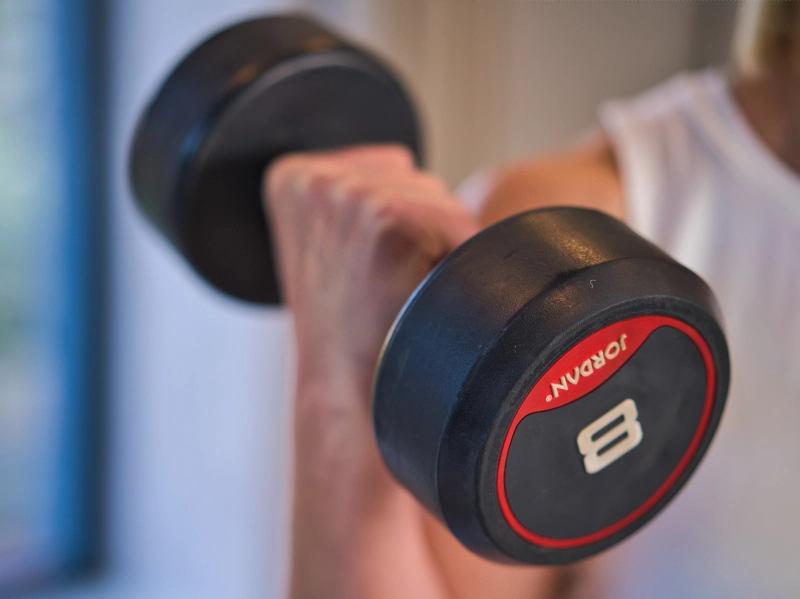
Resistance exercise is linked to lower rates of heart disease and Alzheimer’s and the biggest benefits come from a ‘sweet spot’ of just 120 minutes weekly.
A study led by researchers at the Harvard T.H. Chan School of Public Health (published in the British Journal of Sports Medicine by Zhang et al.) evaluated the long-term impact of resistance training on mortality. By analysing nearly 30 years of data across 147,374 participants from three large prospective cohorts, the study identified 90 to 119 minutes per week as the optimal “sweet spot” for strength training to maximize longevity.
Key findings
1. The 90–120 minute “sweet spot”
Participants engaging in 90 to 119 minutes of resistance training per week (such as free weights, weight machines or bodyweight exercises like push-ups and squats) experienced significant reductions in mortality compared to those doing no strength training:
- 13% lower risk of all-cause mortality (early death from any cause)
- 19% lower risk of cardiovascular disease mortality
- 27% lower risk of neurological disease mortality (such as Alzheimer’s disease)
2. The plateau effect
The researchers found a clear dose-response relationship with a plateau. Doing more than 120 minutes of resistance training per week did not offer additional reductions in all-cause, cardiovascular, or neurological mortality.
3. Combining strength training with aerobic exercise yields the highest protection
While resistance training alone and aerobic exercise alone both decreased mortality risk, combining the two produced the strongest protective effect. Aerobic exercise generally conferred a higher overall risk reduction than strength training alone. However, participants who completed high levels of aerobic activity combined with 60–119 minutes of strength training saw up to a 45% to 58% reduction in overall mortality risk compared to sedentary individuals.
Study design and strengths
Large sample size: Tracked 147,374 healthcare professionals (31,540 men and 115,834 women) over up to 30 years, observing 35,798 deaths.
Repeated assessments: Unlike older studies that measured physical activity only once at baseline, this study updated exercise habits every two years. This accounted for lifestyle changes over time and reduced measurement errors.
Practical takeaway
To optimize longevity, aim for roughly 1.5 to 2 hours of resistance training per week – equivalent to two or three 30-to-40-minute sessions – and pair it with regular aerobic activity like brisk walking, running, cycling, or swimming.
At Stronger You we have a large library of recorded classes, so that you can select short workouts of 15 or 30 minutes’ length. Whether you do a resistance training, yoga or Pilates class the workouts are carefully planned to optimise your workout and deliver maximum impact.