
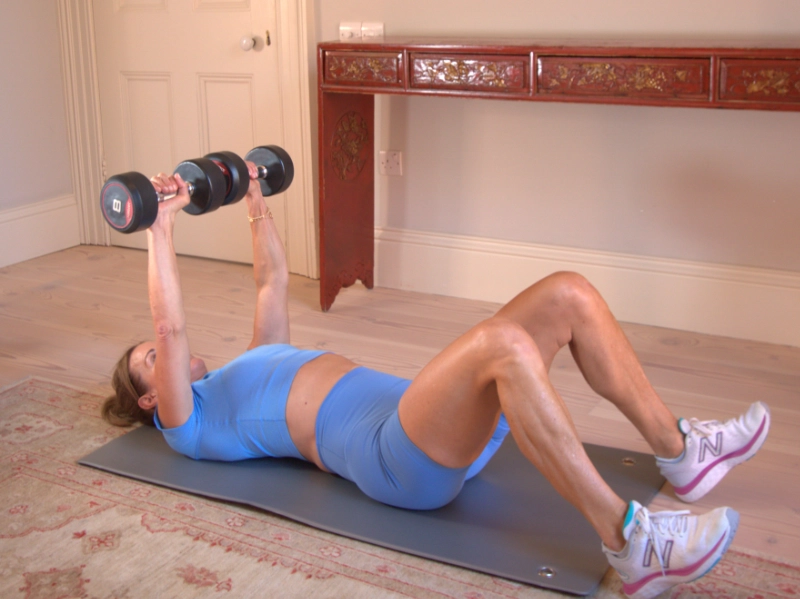

by Emma Kennedy
Certified strength and conditioning coach
Qualified personal trainer and fitness trainer with fitness nutrition. Certified strength and conditioning coach. Emma is passionate about the importance of strength and cardio training. Her classes improve your technique and knowledge, while providing a strong workout that will help you get the maximum benefit from your chosen sport or activity.
If you have spent any time navigating health and fitness in midlife, you have likely noticed a subtle shift. The strategies that kept you lean, energized, and capable in your twenties or thirties – cardio, bootcamps or simply working up a sweat – seem to yield diminishing returns.
You aren’t imagining it. As our bodies mature, our muscle tissue, hormonal baseline and metabolic efficiency evolve. To maintain muscle mass, preserve bone density and build genuine functional power, we need a smarter, more intentional framework. We need progressive overload.
What is progressive overload?
At its core, progressive overload is a physiological principle: To adapt and grow stronger, your muscular and nervous systems must be exposed to a stimulus that gradually exceeds what they are currently accustomed to.
Your body is extraordinarily efficient. If you perform 15 bodyweight squats every Tuesday, it will initially adapt by making those squats easier. But once your body adjusts to that specific demand, it stops adapting. Why would it build new muscle fibres or strengthen bone matrix if the demand remains identical week after week?
Progressive overload is the art and science of continually giving your body a reason to stay (and grow) stronger.
The three levers of progress
When people hear “progressive overload,” they often picture heavy barbells and powerlifting gyms. In reality, weight is only one variable you can dial up. In intelligent strength training, we manipulate three primary levers:
- Resistance (load): Progressing from bodyweight to light dumbbells or stepping up from a 6kg weight to an 8kg, 10kg or heavier load.
- Volume (reps and sets): Doing 8 repetitions with good form this week, 10 reps next week, and 12 reps the week after before increasing the weight.
- Mechanical complexity (movement progressions): Evolving the exercise itself. For instance, moving from a standard static lunge to a walking lunge, or from a basic incline push-up to a full floor push-up.
Key takeaway
You don’t need to lift massive weights straight away. The goal is small, controlled incremental challenges that respect your current starting point while systematically driving adaptation.
How progressive overload looks across every fitness level
Because progressive overload is a principles-based system rather than a fixed set of exercises, it works universally – whether you are returning from a long break or are already an avid runner or lifter looking to improve.
| Stage/Level | Starting point | How we apply progressive overload | Primary adaptation |
| Beginner | Bodyweight movement patterns, chair squats, wall push-ups. | Improving form, adding reps, introducing light external resistance (resistance bands or light dumbbells). | Neuro-muscular coordination, initial strength gains, movement confidence. |
| Intermediate | Moderate dumbbell training, goblet squats, floor push-ups. | Gradually increasing working weight, adjusting tempo (slowing down the movement), increasing total set volume. | Muscle hypertrophy, metabolic stamina, joint resilience, bone density preservation. |
| Advanced | Heavier free weights, single-leg/unilateral progressions, compound lifts. | Manipulating work-to-rest ratios, complex multi-planar movements, increasing working weight. | Peak power, structural longevity, athletic vitality and resilience against injury. |
Why midlife is the essential time to master strength
From our 40s onward, natural age-related muscle loss (sarcopenia) accelerates unless actively countered with resistance stimulus. Muscle is not just about aesthetics; it is our primary metabolic currency, our balance control system and our safeguard against osteopenia and osteoporosis.
Cardio keeps your heart and lungs healthy, but strength training keeps your structural frame intact. When you train with progressive overload, you aren’t just getting “toned” – you are investing in your long-term independence, posture, energy and physical freedom.
Finding your starting line with Stronger You For Life
Effective training requires structure, not guesswork. Throwing together random online workouts often leads to plateaus, burnout or nagging injuries because there is no systematic progression built into the design.
At Stronger You For Life, we have built targeted, progressive courses tailored specifically to where you are right now:
- Stronger You For Life: Foundation – Master core foundational movements with perfect technique, build baseline strength safely and feel comfortable picking up weights.
- Stronger You For Life: Intermediate – Take your strength to the next level with progressive weight overloading, structured volume and refined body conditioning.
- Stronger You For Life: Advanced – Push your athletic boundaries with challenging mechanical progressions, heavier loading strategies and sophisticated strength programming.
No matter where you begin, the magic lies in consistent, incremental progress. You don’t have to be strong to start – you just need to start to become a stronger you for life.