


by Emma Kennedy
Certified strength and conditioning coach
Qualified personal trainer and fitness trainer with fitness nutrition. Certified strength and conditioning coach. Emma is passionate about the importance of strength and cardio training. Her classes improve your technique and knowledge, while providing a strong workout that will help you get the maximum benefit from your chosen sport or activity.
When people begin a consistent resistance training programme, they usually come for familiar reasons: building bone density, boosting metabolism, improving posture and staying capable and independent in daily life.
Then something unexpected happens a few weeks in. Some members notice that they haven’t reached for the paracetamol or ibuprofen as frequently.
There is clinical evidence linking strength gains to fewer headaches, particularly for the most common headache types experienced by working adults.
The muscle-headache connection
The human head weighs roughly 4.5 to 5.5 kilograms (about 10 to 12 pounds). For every inch your head drifts forward – a posture familiar to anyone who works on a laptop, drives, or looks down at a phone – the cervical spine experiences double or triple that effective load.
When the postural muscles of the upper back (rhomboids, mid-to-lower trapezius and deep cervical flexors) lack endurance and strength, the upper trapezius, levator scapulae and suboccipital muscles are forced to compensate.
Overworked and under-supported, these muscles develop chronic hypertonicity, micro-spasms and myofascial trigger points. Because the nerves supplying the upper neck share pathways with cranial sensory nerves (particularly the trigeminocervical complex), referred pain radiates directly up into the temples, forehead, and behind the eyes.
This mechanism drives two primary types of headache:
- Tension-type headaches (TTH): The classic “tight band” around the forehead or base of the skull, heavily tied to postural fatigue and muscle tension.
- Cervicogenic headaches: Secondary headaches originating from structural or muscular dysfunction in the neck and radiating upward.
What the research tells us
Clinical researchers have examined resistance training specifically as an intervention for headache frequency and intensity.
1. Targeted resistance slashes headache days
In landmark research published by the National Research Centre for the Working Environment in Denmark led by Dr. Lars L. Andersen, researchers examined office workers suffering from chronic neck pain and frequent tension headaches.
The participants engaged in progressive resistance training using elastic resistance bands and dumbbells targeting the neck and shoulder girdle (exercises including lateral raises, shrugs and reverse flys). The results:
- Progressive strength training reduced weekly headache frequency by 43% to 56%.
- Even brief daily bouts of resistance work (2 to 12 minutes) produced clinically meaningful relief.
2. Strength outperforms passive stretching
Clinical trials comparing passive stretching against active strengthening show that stretching alone does not create long-term relief.
A 12-month randomised controlled trial published in the Journal of Rehabilitation Medicine evaluated women with chronic headaches and neck pain. Both progressive strength training and endurance loading significantly outperformed stretching alone for reducing headache intensity and pain duration. Stretches may loosen a tight muscle temporarily, but without strength to support the head against gravity, the strain inevitably returns.
3. Neurological resilience and migraines
While migraines are primarily neurovascular rather than purely muscular, randomised controlled trials have demonstrated that resistance training exerts an indirect therapeutic effect by stimulating systemic anti-inflammatory cytokines, elevates endorphin thresholds and improves autonomic nervous system regulation – helping dampen the hyperexcitability of the central nervous system that triggers migraine episodes.
Why getting stronger works: Three primary mechanisms
1. Building “muscular armour” around the neck
Strength training creates a supportive scaffold. When your upper back and shoulder girdle become strong, holding your head upright ceases to be an endurance struggle. The muscles operate far below their maximum fatigue threshold, preventing the ischaemic, oxygen-deprived spasms that produce tension headaches.
2. Remodelling fibrotic tissue
When muscles stay locked in sustained isometric contractions (like sitting slumped at a desk), blood circulation drops and muscle fibres can develop painful adhesions. Dynamic resistance exercises – moving muscles through a full range under load – pumps blood, flushes metabolic waste and signals muscle tissue to remodel and repair.
3. Elevating systemic pain thresholds
Lifting weights triggers exercise-induced hypoalgesia (EIH). Sustained muscle contraction releases beta-endorphins and endocannabinoids while modulating pain-inhibitory pathways in the spinal cord. Over time, consistent lifters demonstrate a higher physiological threshold for pain perception across the entire body.
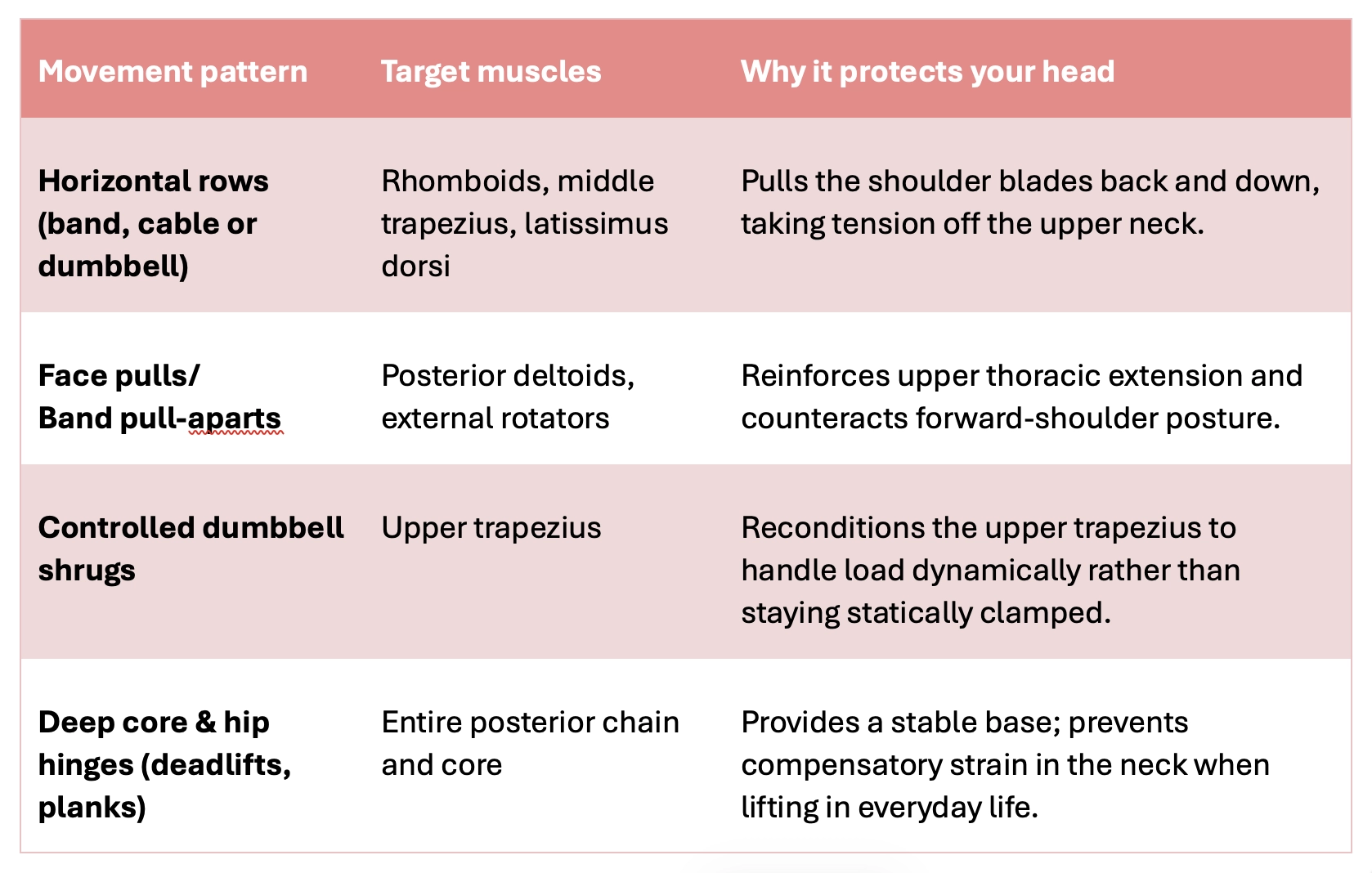
How to train for fewer headaches
If you want to use strength training to protect against head and neck tension, the strategy requires intention. Going to the gym and wildly grinding out heavy overhead presses with poor form can aggravate symptoms rather than relieve them.
The Stronger You takeaway
Headaches aren’t something you simply have to endure as you grow older. Your neck and shoulders are not fragile structures that need to be sheltered from work; they are adaptable tissues that thrive on intelligent, progressive load. When you strengthen the muscles that carry you through the day, you eliminate the constant low-grade fatigue that so often turns into pain.
Start with light resistance, focus on good alignment and remain consistent. Building strength isn’t just about shaping muscle or protecting your joints – it is one of the most effective, science-backed tools for clearing your head and reclaiming your energy.