
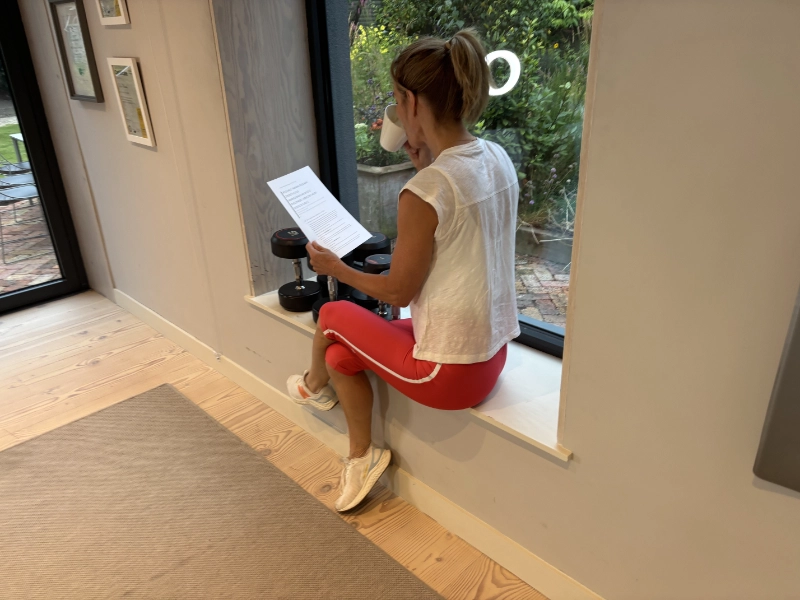

by Clare Kennedy
Level 4 personal trainer UCD, Certified nutritionist with MAC Nutrition
My passion is helping people reach goals they have struggled to achieve. While weight loss and body composition are the most active part of my practice, I also work with clients diagnosed with conditions such as osteoporosis and sarcopenia.
The expectation for midlifers, especially women, is to slow down and lose vitality. At Stronger You for Life, we believe that this thinking is an outdated story that should be over. Midlife isn’t a closing chapter; it’s an exciting new chapter! However, like most things, getting the most out of these wonderful decades requires preparation – you need to train your body and mind for longevity and strength.
Hormonal shifts bring real challenges: unpredictable energy, mood swings, and changes in body composition. But while you can’t change the ageing process you can manage it and take ownership of your health, building physical and mental strength that will define you for decades ahead. It’s a pivotal phase and it’s time to train like it!
Reframing menopause: Focus on maximising
Menopause is a perspective shift. You can change your focus from managing symptoms to maximising your health, confidence, and independence. With smart, practical training, you can:
Build muscle mass
This is your strongest defence against aging, injury, and metabolic decline.
Boost bone density
Essential for staying active and fracture-free as oestrogen’s protective effect diminishes.
Stabilize mood and clarity
Harness exercise-driven endorphins to manage anxiety and brain fog.
Regulate energy
Move from feeling depleted to feeling capable and energized throughout the day.
The changes you can influence
While the decline in oestrogen is a natural biological process, your consistent lifestyle choices—especially exercise—can really help.
Strength training is your ally because it:
- Supports metabolism: Lean muscle mass is metabolically active and helps burn calories even at rest.
- Improves insulin sensitivity: Critical for managing the common midlife shifts in weight and glucose control.
- Stabilizes mood: Increases serotonin and dopamine naturally.
- Reduces inflammation: Enhances overall joint health and circulation.
Ideas about your training
1. Strength training (aim for 3 times per week)
This is important for muscle growth, bone health, and metabolic support. Since oestrogen aids in muscle and bone maintenance, its decline means that you need to use consistent, progressive overload to counteract the inevitable muscle loss. You know the drill from our classes:
- Prioritize: Compound lifts (squats, deadlifts, rows, overhead presses).
- Form: Aim for 8–12 challenging reps where the last two reps are difficult but still maintain impeccable form.
- Method: Consistently increase the resistance or reps over time (progressive overload).
2. Mobility and flexibility (include in your workouts)
Hormonal changes can lead to stiffness in joints and connective tissues. Mobility is key to maintaining fluid movement, improving balance, and significantly reducing injury risk.
- Warm ups: As tempting as it is don’t skip warmups or the mobility section of a class – dynamic stretches (e.g., controlled arm circles, leg swings)
- Yoga: Consider other forms of exercise such as yoga for muscle tension release.
- Ensure that you maintain functional range of motion in the hips, spine, and shoulders.
3. Cardio for heart and hormones (aim 2 times per week)
Cardiovascular fitness is vital as oestrogen’s heart-protective benefit is reduced. Cardio supports hormone balance, energy, and mood.
- Opt for low-impact, steady-state movement (walking, swimming, cycling) to improve circulation without excessive cortisol spikes.
- Occasionally incorporate short, moderate-intensity intervals (a burst of power walking up a hill or a run) for variety and challenge.
Mindset
Think of your workouts as investments that compound your future physical and mental health.
Listen to your body
Fatigue may necessitate a lighter session, but not a complete rest day. Consistency remains key.
Prioritize protein
Fuel muscle repair and recovery with adequate protein at every meal
Sleep is recovery
Maximize sleep; this is when muscles rebuild and hormones stabilize.
Lift heavy
Challenge yourself to drive adaptation but never sacrifice good form.
We don’t lift weights, to be good at lifting weights. We train so that we can climb hills, cycle mountains, carry heavy bags and keep doing our favourite sports and activities. This functional strength, provides lasting energy, and will get and keep you ready for your most powerful decades yet.
New lease on life
I recently turned 50 and now feel like I did in my mid-20s – with renewed energy for exercise, the kids and life in general.
Class participant
At Stronger You we have a large library of recorded classes, so that you can select short workouts of 15 or 30 minutes’ length. Whether you do a resistance, yoga or Pilates class the workouts are carefully planned to optimise your workout and deliver maximum impact.