

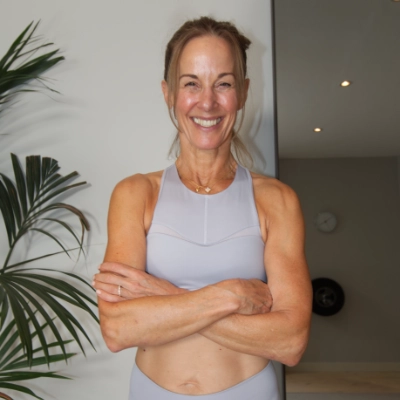
by Clare Kennedy
Level 4 personal trainer UCD, Certified nutritionist with MAC Nutrition
My passion is helping people reach goals they have struggled to achieve. While weight loss and body composition are the most active part of my practice, I also work with clients diagnosed with conditions such as osteoporosis and sarcopenia.
We believe that no matter your age or stage of life, you have the power to influence how well you live. Getting stronger is the single most effective way to improve your vitality, mobility, and confidence, ensuring you lead your best life for decades to come.
However, many people aren’t aware of a natural, gradual shift that begins around your 30s, that results in a steady decline in muscle mass. If we don’t actively counter this process with strength training, the impact on our quality of life – our daily ease of movement and long-term health – can be significant.
Here’s what happens to your muscles and bones when you’re not lifting and why getting stronger is the key to thriving:
The muscle drain: Understanding sarcopenia and being ‘under-muscled’
There is the natural decline of muscle cells as we age. Muscle cell turnover shifts from a state of higher muscle protein synthesis (MPS) below the age of 30, to higher muscle protein breakdown (MPB) after the age of 30. This decline of muscle mass begins gradually. You can lose about 3-8% of muscle per decade if you’re not actively fighting back.
What happens when muscle disappears
1. Body composition changes (the ‘under-muscled’ trap)
This is one of the most critical shifts. When you lose muscle, it’s often replaced by fat tissue. This change in body composition can happen and often your weight on the scales stays the same. You end up being ‘under-muscled,’ meaning you have a high percentage of body fat relative to your lean muscle mass, which compromises your strength and metabolic health, and how you look. Fat takes up more space than muscle so you start noticing that you have grown in places like your midriff or arms.
2. Your metabolism slows down
Muscle is metabolically active – it burns calories even at rest. As you lose muscle, your resting metabolic rate (RMR) drops. This makes it incredibly easy to gain weight and much harder to lose it. The smaller your engine, the less fuel it needs.
3. Everyday life gets harder
Strength isn’t about looking a certain way; it’s about functional fitness. Simple tasks—carrying groceries, opening jars, getting up off the floor, or enjoying activities with family—all demand muscle. Losing muscle means losing your ease of movement and, eventually, your independence.
How strength training saves your muscle
Consistent resistance work – 2 to 3 sessions a week – sends a strong signal to your body to maintain and build muscle tissue. This not only preserves your strength but keeps your metabolism firing and directly fights the under-muscled trend. This is true at any age.
The silent deterioration: Why your bones need stress
Bone is a living tissue that responds to stress. If you’re not engaging in the right activities, your bone density begins to decline. This silent deterioration can lead to osteoporosis (brittle bones) and a higher risk of serious fractures.
What happens when bones are neglected
1. Density drops
Bones need a signal to stay strong and dense. Without weight-bearing exercise (like walking, running or lifting weights), the bones don’t get the stress they need to remodel and stay hard. They become weaker and more porous.
2. Fracture risk skyrockets
Weakened bones, particularly in the hips, spine, and wrists, are far more susceptible to breaking from a trip or fall.
3. Balance and stability suffer
Your muscles and bones work together. When both are weak, your overall balance and stability decline, dramatically increasing your risk of a fall.
How strength training protects your skeleton
Strength training is the best medicine for bone health. When you lift a heavy weight, you place a pulling force on the bone. This “stress” signals the bone to adapt by becoming stronger and denser. This protective mechanism can not only slow bone loss but, in some cases, even improve bone density.
The big picture: Beyond muscle and bone
The benefits of strength training extend into every aspect of your well-being. It is the single most powerful thing you can do to future-proof your body and mind:
Injury and pain prevention
Stronger muscles stabilize your joints, improve your posture, and protect your spine, reducing chronic back pain and the risk of strains and sprains.
Boosted mood and confidence
Resistance exercise is a known mood booster, helping to reduce symptoms of anxiety and depression. It also builds confidence and a profound sense of capability.
Better sleep and energy
Regular movement, especially strength work, is tied to better sleep quality and more sustained energy throughout the day.
It’s never too late: Your action plan
You have the power to influence your vitality. The sooner you start, the better, but it’s genuinely never too late to build strength and resilience.
1. Commit to 2-3 sessions a week
Focus on quality over quantity. Even 30 minutes of targeted resistance work is enough to send powerful signals to your muscles and bones.
2. Focus on functional movements
Prioritize exercises that use multiple muscle groups, like squats, lunges, pushes (e.g. chest press), and pulls (e.g. rows). These translate directly into real-life strength.
3. Prioritize consistency
Results come from sticking with it. We offer live classes and on-demand recordings to make fitting strength work into your life easy and convenient.
Start now. The quality of your future life depends on the strength you build today.
Seeing results
Your classes are soo good. I’ve been doing them for exactly a year now and have gained strength and lost half a stone in the process.
All my years at Riverview and I never stuck with a weekly exercise class. In the summer I was easily doing 2–3 of your classes per week!
Class participant
At Stronger You we have a large library of recorded classes, so that you can select short workouts of 15 or 30 minutes’ length. Whether you do a resistance, yoga or Pilates class the workouts are carefully planned to optimise your workout and deliver maximum impact.