


by Clare Kennedy
Level 4 personal trainer UCD, Certified nutritionist with MAC Nutrition
As we move into our 40s and beyond, aches and pains in our joints – whether it’s the knees, hips, shoulders, or back – become increasingly common. Natural changes, such as reduced muscle strength (sarcopenia), decreased tendon elasticity, and a gradual decline in cartilage resilience, affect how our entire skeletal system copes with daily activity.
The health of your joints depends on a delicate balance: the load placed on the joint versus the support provided by the surrounding muscles. When the muscles responsible for stabilising a joint aren’t strong enough to absorb and distribute force effectively, that stress is transferred directly to the joint structure itself. This is why strength training is a non-negotiable tool for longevity.
Why are my joints aching?
One of the primary drivers of joint discomfort is the natural loss of muscle mass. If the muscles around your hips, thighs, and shoulders aren’t firing properly, your joints may not “track” or rotate as smoothly as they should.
Mechanical strain
Over time, poor tracking leads to irritation during everyday movements like reaching for a shelf, climbing stairs, or typing.
Lifestyle factors
Long stretches of sitting can “switch off” the glutes and tighten the hip flexors, while sudden bursts of “weekend warrior” exercise can overwhelm tissues that aren’t conditioned for high intensity.
External factors
Even small things, like worn-out footwear or a poorly set up desk, can alter how forces travel through your ankles, knees, and spine.
How strength training supports joint health
Strength training is one of the most effective ways to manage and even prevent joint pain. It works through three primary mechanisms:
1. Structural support
Strong muscles act as a natural brace. For example, strong quadriceps protect the knee, while a robust rotator cuff stabilizes the shoulder.
2. Improved alignment
Training fixes muscle imbalances. Stronger glutes, for instance, prevent the knees from collapsing inward and keep the pelvis level, protecting the lower back.
3. Cartilage nutrition
Joints don’t have a direct blood supply; they rely on movement and “loading” to circulate synovial fluid, which delivers nutrients to the cartilage.
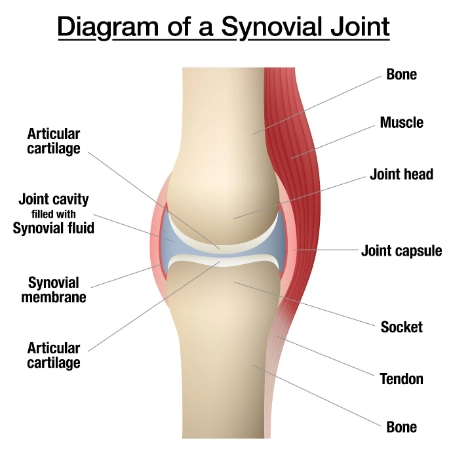
Shutterstock
Movement strategies: What to embrace and what to steer clear of
What can I do?
- Virtually all types of exercise are beneficial. However, research shows that people who include resistance training with a mix of other activities such as yoga, Pilates, cycling and swimming fare even better.
- Choose classes that you enjoy! Aim for three classes a week.
- Ideally include resistance training classes. Stronger You For Life classes are ideal because the classes cover the foundations, such as squats, glute bridges, and chest presses and there is a strong focus on good technique.
- Don’t just focus on where it hurts. If your knees ache, work your hips. If your back aches, work your core. Exercises like clamshells, cat-cow and downward dog will improve your overall stability.
- Prioritize mobility. Tightness in one area often causes pain in another. For example, stiff ankles can lead to knee pain, and tight chest muscles can cause shoulder issues. Classes such as yoga and Pilates are great for improving your range of mobility.
What should I avoid?
- Too much, too soon: Jumping from a sedentary period straight into high-impact activities like running is a common trigger for flare-ups.
- Working through sharp pain: There is a difference between “muscle burn” and “joint pain.” If a movement causes a sharp, stabbing, or swelling sensation, stop and reassess your form.
- Ignoring the chain: Don’t just treat the symptom. Aching wrists might be a result of weak shoulders; aching knees often start at the hips.
Here are some examples of exercises that can help. However our advice is to book a 1:1 personal training session with one of our instructors to develop a programme of exercises that suit you and your condition
| Joint Area | Key Support Muscles | Recommended Movement |
| Shoulders | Rotator cuff, Traps, Rhomboids | Thread the Needle, shoulder press |
| Lower Back | Core (Abs), Glutes, Erector Spinae | Dead bugs, Glute bridges |
| Hips/Knees | Glutes, Quads, Hamstrings | Squats, Step-ups, Clamshells |
The long game: Building a robust foundation
Ultimately, joint health in midlife isn’t about chasing the fountain of youth; it’s about maintaining the machinery you have. While natural wear and tear is a reality of the passing years, discomfort doesn’t have to be your new normal. By shifting the focus from “treating the pain” to “supporting the structure,” you move from a reactive approach to a proactive one.
Strength training provides the biological insurance policy your joints require. It ensures that your muscles – rather than your cartilage – bear the brunt of your daily movement. Whether you’re looking to remain competitive on the tennis court or simply want to reach the top shelf without a second thought, the formula remains the same: load the muscle, protect the joint, and keep moving.