

by Ruth Delahunty
Yoga expert
Ruth is a member of the Yoga Medicine ® Therapeutic Specialist team and creator of the Yogaru, 108 Asana yoga sequencing cards. She has been teaching yoga for more than 15 years.
As we pass our mid-thirties, our bodies begin to change. One subtle but important shift is the gradual decline in muscle mass – a process known as sarcopenia. It’s easy to dismiss as “natural ageing,” but its impact is real: less strength, diminished mobility, and a subtle reduction of how fully we can live our lives.
The question is how do you become and stay strong – as a foundation for vitality, resilience, freedom of movement, and ease in everyday life.
Yoga can offer a sustainable and holistic path to strength. It’s not just about flexibility or stretching. When practised with awareness, yoga is a form of resistance training, using body weight, with an emphasis on smooth control movement, stability, and integrity.
How yoga shapes functional strength
1. Isometric holds and sustained tension
Many yoga postures invite you to pause and hold – think Warrior II, Chair and balancing pose. In those moments your muscles generate force while staying the same length. That time under tension develops endurance, activating smaller stabilising muscles that keep joints safe, strong, and responsive.
2. Eccentric transitions and controlled movement
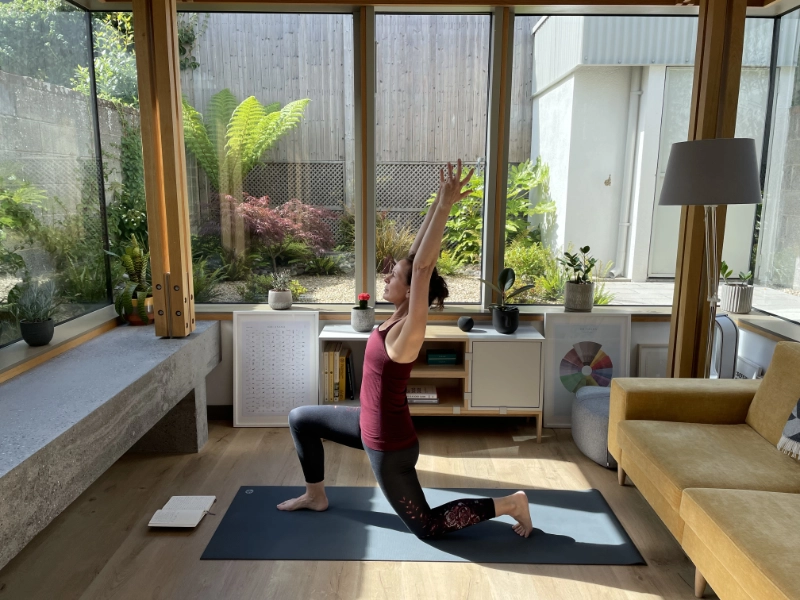
Strength isn’t just about pushing or holding – it’s also in how smooth and gracefully you transition from pose to pose. Think of stepping back into a high lunge, moving from front facing to side facing poses and lifting a leg into balancing poses. These transitions train your muscles to accept load while lengthening, to absorb force, and to cultivate better fibre recruitment. Over time they also reinforce the health of tendons and connective tissue – especially vital as we age.
3. A whole-body core approach
In yoga, “core” is not just abs – it’s a deep cylinder of connection, from pelvic floor to the deep back muscles, from obliques to the transverse abdominis. In almost every pose, you’ll find yourself drawn into this internal support system. A strong core beyond aesthetics means better posture, less lower back fatigue, and a body that moves from the centre with integrated steadiness.
Yoga and other strength work
If you already lift weights or do resistance training, yoga is a perfect companion. Strength training builds power and density; yoga ensures that strength is useful – balanced, mobile, resilient, responsive in real life. When the two practices cohabit, weaknesses get exposed and corrected, imbalances softened, and longevity improved.
Yoga also brings qualities to the table to maximise your resistance training results:
- Mobility and flexibility: Supporting a healthy range of motion for stronger, safer lifts (like sinking deeper into a squat with stability).
- Stabilisation: Strengthening the small, often forgotten supporting muscles that protect joints under load.
- Mind-body connection: Building awareness of alignment and movement patterns for better lifting form.
- Active recovery: Offering gentle movement and stretching that help muscles repair, reduce stiffness, and keep you training consistently.
Together, the pairing creates a training approach that is powerful yet adaptable – strength that is not only built but sustained.
A practice that adapts with you
One of yoga’s greatest gifts is adaptability. As joints shift, or mobility needs change, the practice can evolve with you. You can scale, modify, support, or intensify – always staying within your own edge. It’s a lifelong tool for cultivating strength and evolves with your needs.
Through the intentional resistance of yoga – in holds, transitions, core engagements – you’re not just building muscle. You’re building physical and mental resilience, balance, and the ability to move across years with grace.
“I have never felt better since starting Ruth’s classes. I’ve noticed I’ve had less sporting injuries, I feel more flexible, stronger, and I’m even sleeping better!’”